
Is Your Doctor’s Scan Enough? The Medical Benefits of 4D Ultrasounds
“An ounce of prevention is worth a pound of cure.” For expecting parents, those words have never rung truer. In the beautiful, small community of


“The only thing we have to fear is fear itself.” Franklin D. Roosevelt’s famous words might not have been about pregnancy, but they certainly resonate with every parent-to-be. The moment you see those two pink lines, a world of love and excitement opens up. But as your body changes and you start to feel those first flutters, a new kind of worry can creep in.
You start to think about all the “what ifs.” What if my baby isn’t healthy? What if there’s a complication? These fears are completely normal, and they’re part of the profound responsibility of being a parent. While we can’t eliminate every worry, modern technology gives us incredible tools to replace fear with knowledge and empowerment.
One of the most common questions we hear from expecting parents is about the early detection of a condition called cleft lip or palate. It’s a natural concern, and a testament to your desire to be the best advocate for your little one. So, let’s explore this topic together and uncover how modern 4D ultrasounds can assist in giving you a more comprehensive view of your baby’s development.
First, let’s understand what we’re talking about. A “cleft” simply means a split or an opening. A cleft lip is a visible opening in the upper lip that can range from a small notch to a larger split that extends into the nose. A cleft palate is an opening in the roof of the mouth. These two conditions can occur together or separately, and they happen when the facial structures don’t fully fuse together during the early stages of pregnancy.
According to the Centers for Disease Control and Prevention (CDC), cleft lip with or without cleft palate affects about 1 in every 1,600 babies born in the United States, and cleft palate alone affects about 1 in every 2,800 babies. It’s one of the most common birth anomalies, but it’s important to remember that it is also a highly treatable condition. With modern medicine and a dedicated care team, children with clefts can live full, happy, and healthy lives.
Knowing this, the question isn’t just about detection, but about early detection. And that’s where the magic of advanced ultrasound technology comes into play.
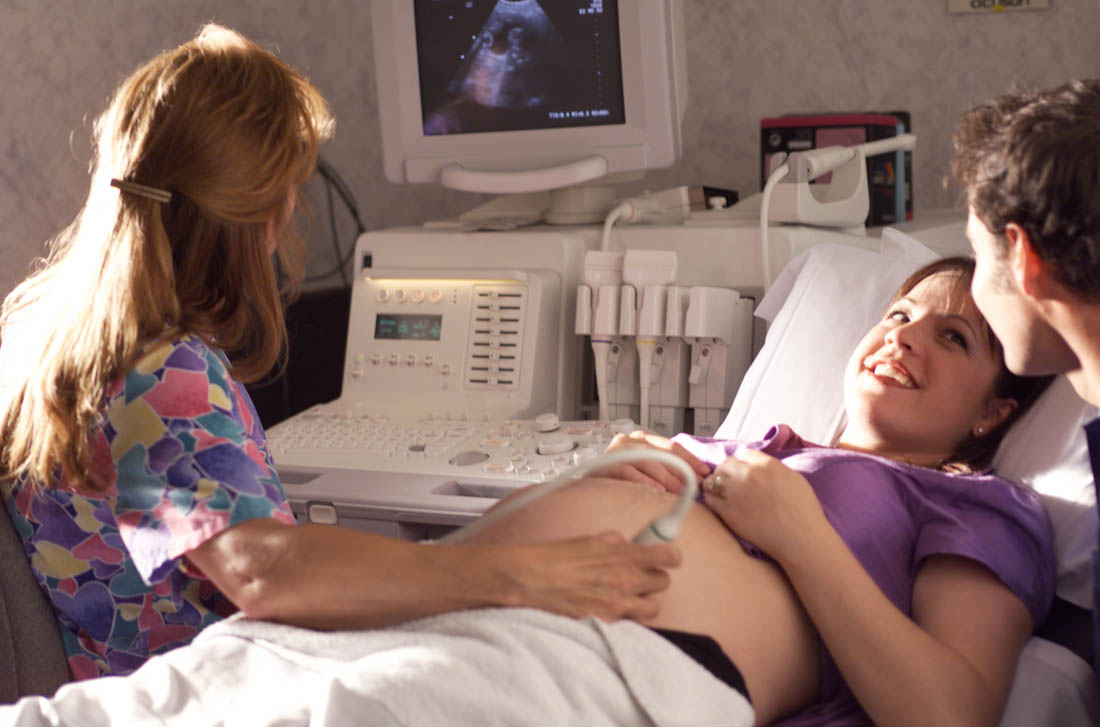
When you’re around 20 weeks pregnant, you’ll have a routine anatomy scan with your doctor. This is a crucial appointment where a sonographer uses traditional 2D ultrasound to examine all of your baby’s major organs and body parts. This scan is the gold standard for checking on your baby’s health and development.
During this appointment, the sonographer will get an initial look at your baby’s face. The 2D ultrasound is a powerful tool for detecting a cleft lip, as it can often show the visible opening in the baby’s upper lip. However, detecting a cleft palate can be much more challenging with a standard 2D image. The palate is located deep inside the mouth, and it’s difficult to get a clear, unobstructed view with a flat, cross-sectional image. This can leave parents with a lingering question mark, and a desire for a more comprehensive look.
This is where the incredible technology of 4D ultrasound in Euless TX, enters the picture. Unlike the flat images of a 2D scan, a 4D ultrasound provides a live, moving, three-dimensional video of your baby in the womb. Imagine the difference between looking at a black-and-white photograph of a book’s cover and actually getting to see a video of the book being opened and flipped through. That’s the kind of detail and depth that 4D ultrasound in Euless, TX, provides.
Here’s how this advanced view can be a powerful tool for early detection:
The 4D ultrasound in Euless, TX, builds a lifelike, three-dimensional image of your baby’s face. This allows the sonographer to see the entire facial structure from various angles and in real-time. A cleft lip, which may be a subtle line on a 2D image, becomes a much clearer, more defined detail on the 4D scan.
The 4D technology can get a better view of the oral cavity. By watching the baby in real-time—maybe when they yawn or open their mouth—the sonographer can get a better look at the roof of the mouth and the palate. This is a significant advantage over 2D scans, where a cleft palate is often hidden from view.
Several studies have shown that 4D ultrasound in Euless, TX, significantly increases the detection rate of cleft palate. While 2D scans are quite good at spotting a cleft lip, the ability of 4D technology to get a more comprehensive view of the entire facial structure can make a world of difference in identifying both conditions together.
It is crucial to understand that a 4D keepsake ultrasound is not a replacement for your medical-grade, diagnostic anatomy scan. It is a powerful supplement that can offer peace of mind and, in some cases, provide a clearer look that can assist your medical team.
So, why is early detection so important? It’s not about fearing a diagnosis; it’s about empowerment. Knowing about a cleft lip or palate before your baby is born gives you and your family time to prepare in the following ways:
Early detection of a cleft lip or palate isn’t about worry; it’s about giving you a head start on an actionable plan. Knowing ahead of time empowers you to:
A: A 4D ultrasound in Euless, TX, can raise a strong suspicion of a cleft lip or palate, but it cannot provide a definitive diagnosis. A definitive diagnosis must be made by a medical doctor, often with a referral to a specialist. If our sonographer sees something that warrants a closer look, they will always advise you to follow up with your healthcare provider for a diagnostic scan.
A: We are very good at getting babies to move! Our sonographers have a lot of experience and can try different techniques to encourage your baby to change positions. We understand how important it is to get a good look at your baby’s face.
A: A cleft lip or palate primarily affects a baby’s appearance, feeding, and speech. It does not typically impact their cognitive development or other health markers. With the right medical care, the long-term prognosis is excellent, and most children lead normal, healthy lives.
A: In some cases, yes. It can run in families, but many cases happen spontaneously with no clear genetic link. Your doctor can provide more information based on your family history.
Navigating a pregnancy is a journey of a thousand emotions, and we at 4Baby Ultrasound are here to support you every step of the way. We believe that technology should serve a higher purpose—to bring peace, reassurance, and a deeper connection to your baby.
Our team of skilled and compassionate sonographers are not just operating machines; they are your partners in this incredible journey. We use state-of-the-art 4D ultrasound in Euless, TX, technology that provides exceptional clarity, but it is our expertise and caring approach that truly sets us apart.
We are here to provide you with the most detailed and heartwarming images of your baby, and while we are not a medical diagnostic center, our sonographers are trained to notice and will always encourage you to discuss any findings with your physician.
Don’t let the “what ifs” overshadow the joy of pregnancy. Let us help you replace worry with a sense of control and preparedness. We are here to provide you with the clearest possible picture of your baby’s world, so you can move forward with confidence and excitement.
We invite you to visit one of our convenient locations, where we blend professional care with a warm, family-friendly atmosphere. You can find us at 4835 N. O’Connor Suite 132 Irving, TX 75062, 5201 S Broadway Ave, Suite 108 Tyler, TX 75703, and 1831 E Broad Street suite 220B Mansfield TX 76063. To learn more or to book your appointment, please call us at (214) 987-3604, (903) 213-7030, or (817) 590-0200. We can’t wait to be a part of your story.
Our 4 Baby ultrasound and sonogram sessions allow you to see your unborn baby in 2d, 3d, and 4d live motion with a 3D/4D/HD ultrasound at our locations in Texas, serving Dallas, Fort Worth, Waxahachie, Ennis, Grapevine, Frisco, Flower Mound and Tyler Texas as well.
“An ounce of prevention is worth a pound of cure.” For expecting parents, those words have never rung truer. In the beautiful, small community of
“The smallest things take up the most room in your heart.” For expectant parents in Bedford, Texas, a city of over 49,000 residents, the journey
We provide a safe and comfortable environment for you and your guests to experience your gender blood test, 2D gender reveal or 3D sonograms and 4D ultrasounds.
2025 © 4babyultrasound All rights reserved | Powered by 4Baby Ultrasound & Photography Boutique